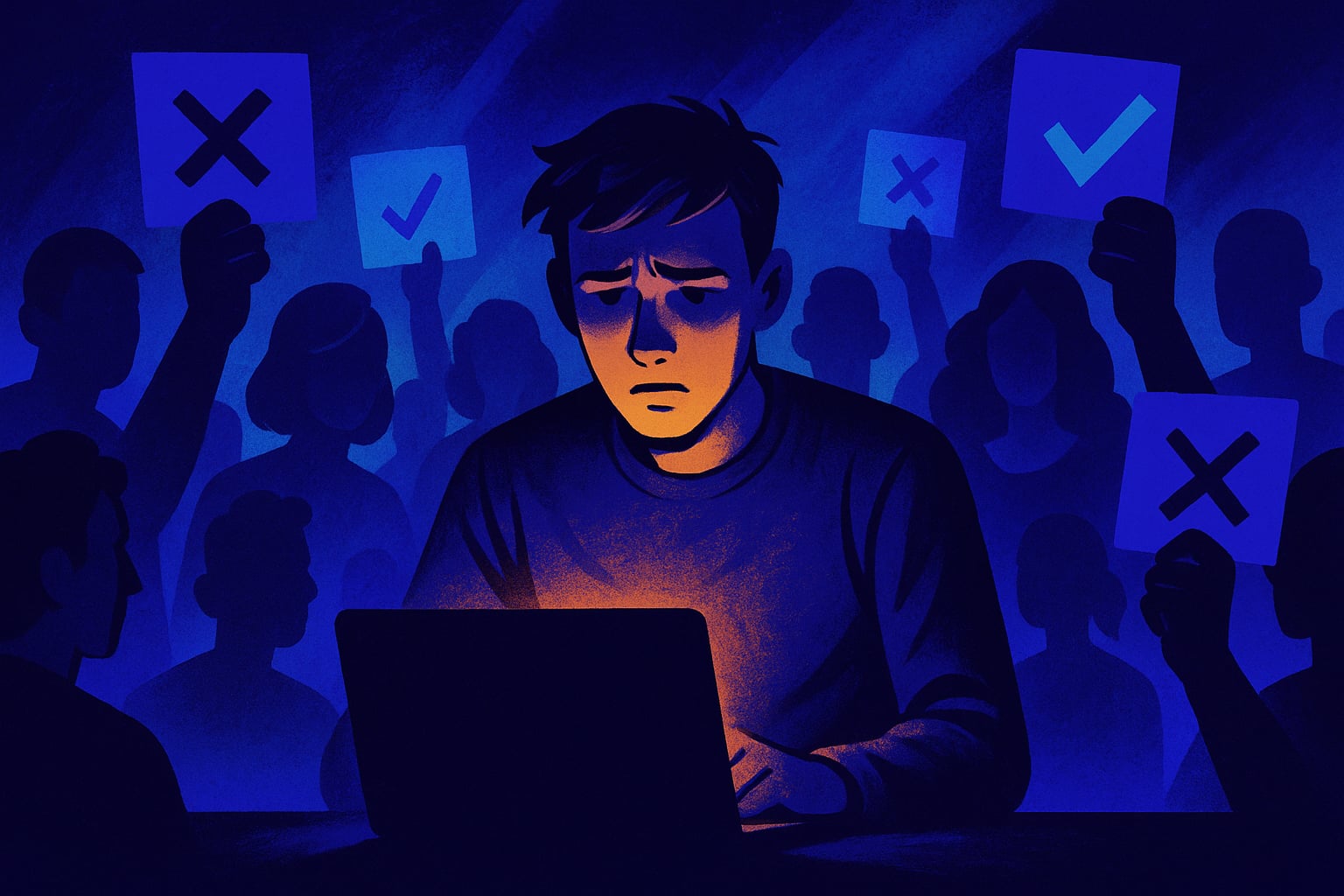
Giving your Discord members voting power over server decisions sounds like great community building. In practice, it creates gridlock, factions, and a server that starts optimizing for the loudest voices instead of the actual community.
The experiment that felt brilliant for about 48 hours
My server had 380 members and a problem every server owner knows: I was the only one making decisions, and people were starting to complain that the server didn't feel like theirs. So I did what felt like the obvious fix. I set up a #votes channel and announced that for the next two weeks, the community would decide everything. New channels, role names, event timing, even whether we kept certain bots. Full democracy.
The first two votes were great. People picked a new channel name in 20 minutes. Someone suggested a weekly game night and 60 people voted yes within an hour. It felt alive. It felt like I had finally cracked the engagement problem.
By day four, it had quietly become a different server.
What actually went wrong (and why I didn't see it coming)
The first sign was the factions. A group of about 15 very active members started voting as a bloc. They weren't coordinating visibly, just friends who were always online at the same time. Anything they pushed, passed. Anything the quieter majority wanted, failed by default because that majority wasn't around at 11pm when the polls closed.
Then came the decision fatigue. I ran 22 votes in 14 days. By the end, the same 18 people were voting on everything and the other 362 had completely stopped engaging with the channel. I had accidentally built a government where voter turnout was 5%, and the 5% knew each other.
The worst one was a vote on whether to delete the #off-topic channel. It passed 11 to 9. I deleted it. Three people DMed me that same day saying they were leaving because that was the only channel they actually used. Those three had never voted once.
I talked through the mess with a few other server owners and the pattern was the same every time. Voting rewards whoever is most online, not whoever cares most. The quiet members, the ones who joined because they genuinely love the topic, get drowned out by the loudest regulars. You think you're being inclusive but you're actually just shifting the power from yourself to a small loud group.
I ended the experiment early. I went back to making decisions myself, but I changed how I did it. I started using BuildMyDiscord to run structured feedback prompts through the server, stuff like 'reply with one word describing what you want more of here', which gets responses from people who would never click a poll. The answers were completely different from what the voting bloc had been pushing for.
The server is healthier now. Not because I gave people more control, but because I got better at actually listening to the right signals instead of the loudest ones.
What to do instead
Polls feel participatory but they measure availability, not opinion. The member who cares deeply about your server but works a day job will lose every vote to the 16-year-old who's online eight hours a day. That's not their fault, it's just how real-time polls work.
Async feedback wins here. Open-ended questions in a low-pressure channel, DM prompts for new members, reaction-based sentiment checks that stay open for 72 hours, these reach people who actually represent your community, not just your most online 5%.
Make decisions yourself, but make them transparently. Post why you did something after you do it. 'I added a #resources channel because three people asked for it in DMs this month' lands better than a vote that 94% of your server ignored.
Your job as a server owner isn't to be a politician. It's to know your community well enough to make calls they'll respect. You can't outsource that to a poll.
Frequently Asked Questions
Polls work fine for low-stakes fun stuff like picking an event game or a meme format. For anything structural, like channels, roles or rules, they mostly reflect who's online at that moment, not what your whole community wants.
Async and low-effort formats work best. Open-ended one-line prompts, reaction-based questions that stay open for days, or even direct DMs to newer members who haven't settled in yet. Polls actively disadvantage anyone who isn't chronically online.
Because they're the most online. Discord polls are real-time by nature, so whoever is in the server most often controls the outcome. This creates a small loud majority that doesn't represent your actual community.
Transparent decision-making beats democratic voting for most server choices. Make the call, then explain it briefly. Members respect owners who have a point of view. They get frustrated by owners who seem to be stalling every decision behind a poll.
Build yours in about 3 minutes
Stop wiring up channels by hand. Describe it, and it builds itself.
Tell the AI what your community is for and get a full Discord server back, channels, roles, permissions and a management bot, ready before your coffee is.
Build my server freeRelated articles
Discord Music Server Setup: How to Build a Thriving Music Community in 2026
Learn how to build an active Discord music server from scratch, with the right channels, bots, roles, and events that keep musicians talking.
I gave my Discord server a 'topic of the week' and members who hadn't spoken in two months typed their first message.
One small weekly prompt turned a silent Discord server into an actual conversation. Here's what I changed and why it worked.
Discord Art Server Setup: How to Build a Creative Community That Actually Creates in 2026
Build a Discord art server that inspires real creativity. Setup tips, channel structure, bot recommendations, and engagement strategies that work.