
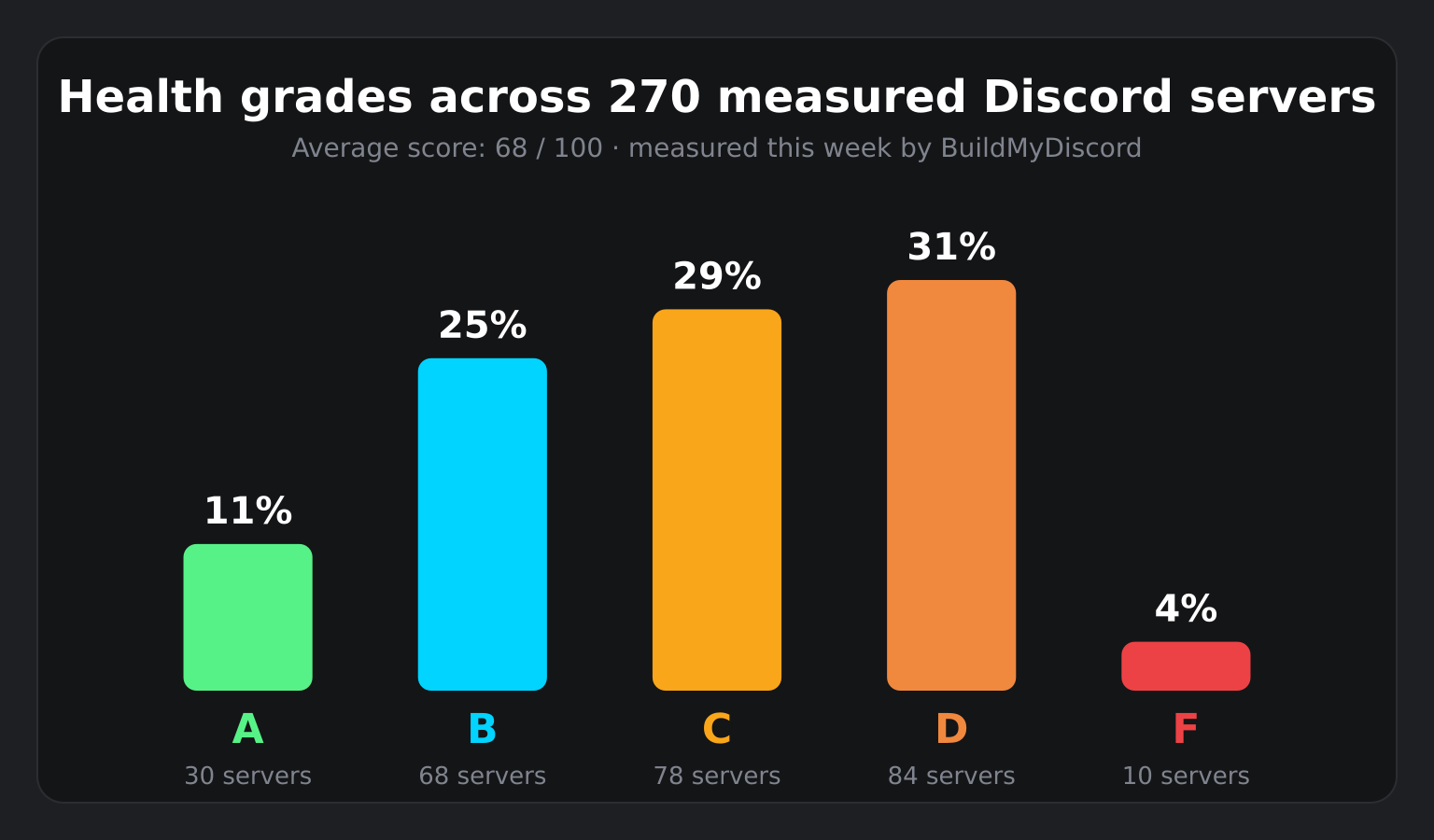
As of this week we have measured 270 Discord servers on a 0 to 100 health score. The average is 68, only 11% earn an A, 35% sit at D or F, and 47% of servers with verification enabled have it silently broken.
Why we started measuring
Our bot lives inside more than a thousand Discord servers. For years we only saw them the way every owner does: a member count, a channel list, a vague feeling that things were quieter than last month.
This week we started giving every server an actual health score, 0 to 100, built from real signals: message activity, member retention, onboarding flow, structure, and safety setup. As of this week, 270 servers have a score. The numbers were worse than we expected.
What the numbers say
The average server scores 68 out of 100. That sounds okay until you look at the distribution. Only 11% of servers earn an A. A third of all measured servers, 35%, sit at a D or an F. Two out of three servers score below a B.
The single most shocking finding came from an audit we ran alongside the scores: of 919 servers with a verification system enabled, 433 had it silently broken. That is 47%. New members clicked the verify button, saw a success message, and got nothing. No role, no access, no server. Nobody noticed, because the failure was invisible to the owner.
The three quiet killers
Across the low-scoring servers, the same three patterns show up again and again. Dead channels: structure built for a community of hundreds while the actual conversation fits in two channels, and the emptiness makes the whole server feel abandoned. Broken onboarding: members join and never make it to their first message, often because a role or verification step fails without anyone knowing. And member bleed: more people leaving than joining, week after week, hidden behind a total count that still looks fine.
None of these announce themselves. A server does not crash. It just gets a little quieter every week until one day the owner posts into silence.

The part that gave us hope
Here is the thing the scores also revealed: most of the damage is repairable in minutes, not months. The 47% verification bug is literally a ten second fix, dragging one role above another. Dead channels can be archived in an afternoon. Conversation comes back when someone starts it on a schedule.
The servers that die are not the ones with problems. They are the ones where nobody could see the problems. That is why we made the health check free, no login needed, at buildmydiscord.com/health. Measure first. Then fix what the numbers show you.
Frequently Asked Questions
The score combines five signal groups from real server data: activity (message volume and trend), onboarding (do new members actually get in), structure (dead channels, role hygiene), retention (member growth vs churn), and safety (moderation and verification setup).
Across 270 measured servers, the average is 68 out of 100 as of this week. Only 11% of servers score an A (90 or higher), and 35% sit at a D or F.
Usually yes. The most common problems, broken verification, dead channels, and no conversation starters, are fixable in minutes once they are visible. Measuring first shows exactly where the points are lost.
Build yours in about 3 minutes
Stop wiring up channels by hand. Describe it, and it builds itself.
Tell the AI what your community is for and get a full Discord server back, channels, roles, permissions and a management bot, ready before your coffee is.
Build my server freeRelated articles
Discord Music Server Setup: How to Build a Thriving Music Community in 2026
Learn how to build an active Discord music server from scratch, with the right channels, bots, roles, and events that keep musicians talking.
I gave my Discord server a 'topic of the week' and members who hadn't spoken in two months typed their first message.
One small weekly prompt turned a silent Discord server into an actual conversation. Here's what I changed and why it worked.
Discord Art Server Setup: How to Build a Creative Community That Actually Creates in 2026
Build a Discord art server that inspires real creativity. Setup tips, channel structure, bot recommendations, and engagement strategies that work.